FIFA WORLDCUP OFFER : 50% Off On ALL ITEMS Get It Now >

Blog

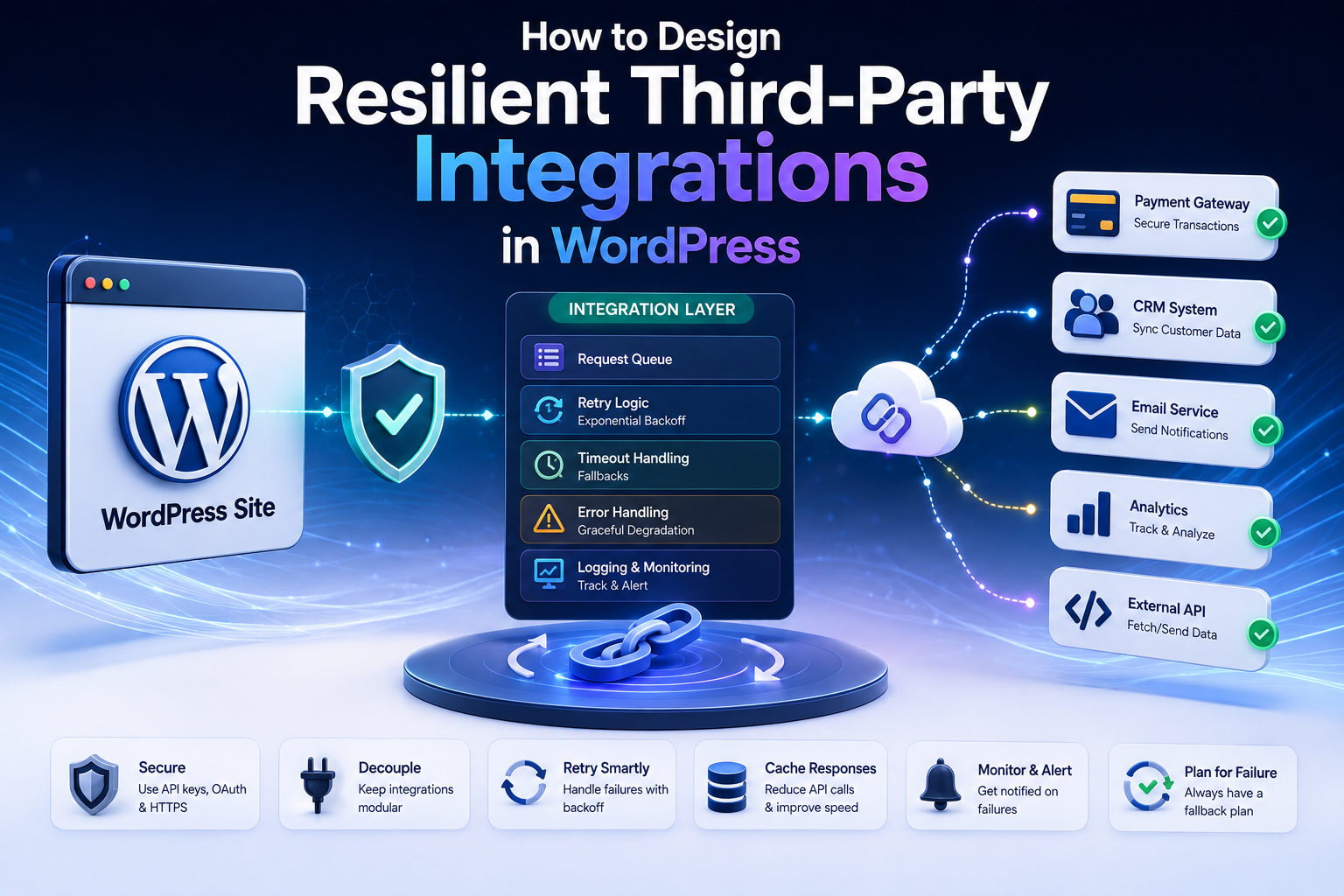
How to Design Resilient Third-Party Integrations in WordPress

How to Design Resilient Third-Party Integrations in WordPress

Learn how to build resilient third-party integrations in WordPress with secure HTTP requests, rate limits, caching, webhooks, validation, error handling, fallbacks, monitoring. [Read More...]
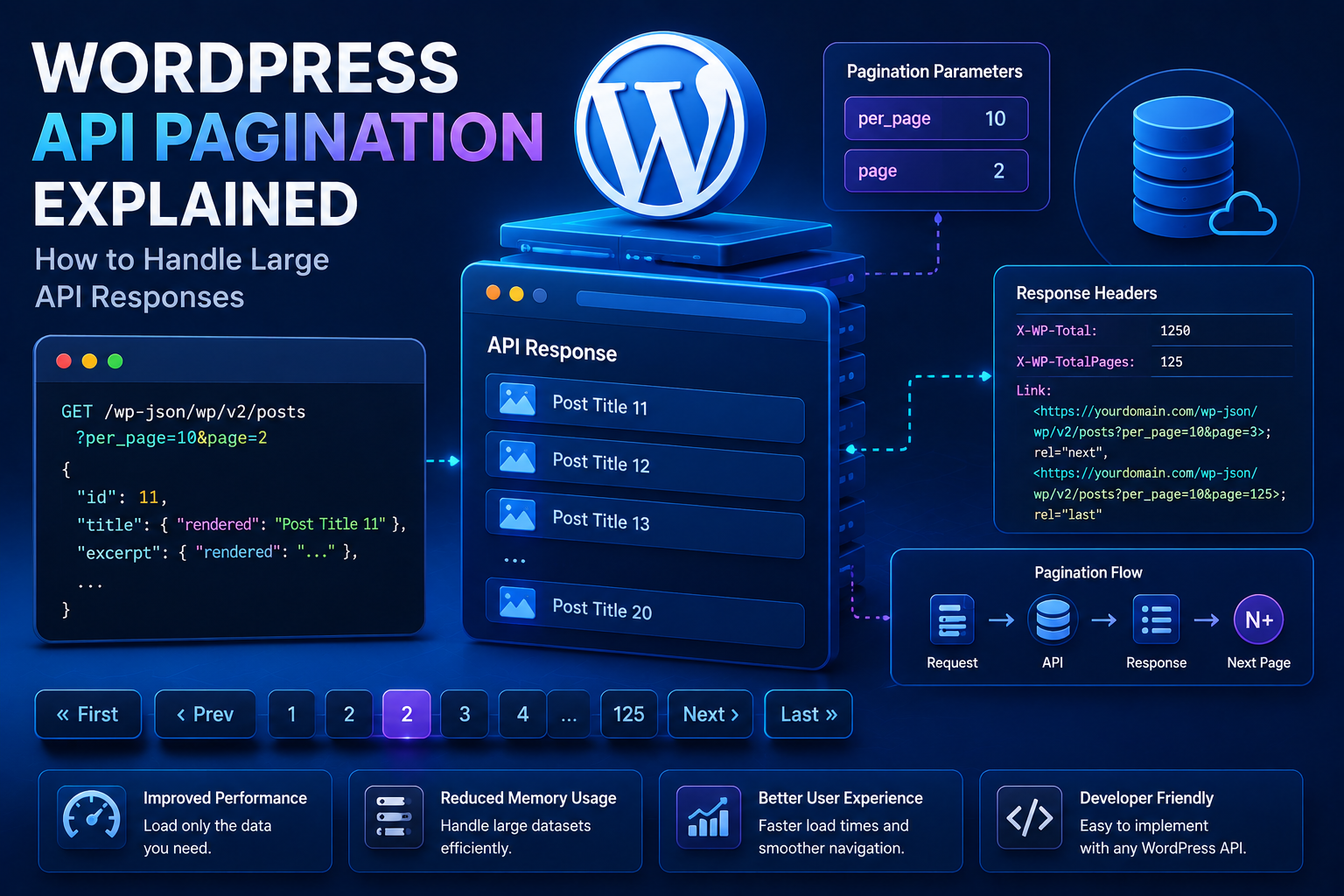
WordPress API Pagination Explained: How to Handle Large API Responses

WordPress API Pagination Explained: How to Handle Large API Responses

Learn how API pagination works in WordPress, including page-based and cursor-based pagination, limits, offsets, next links, batching, synchronization, performance, caching, retries. [Read More...]

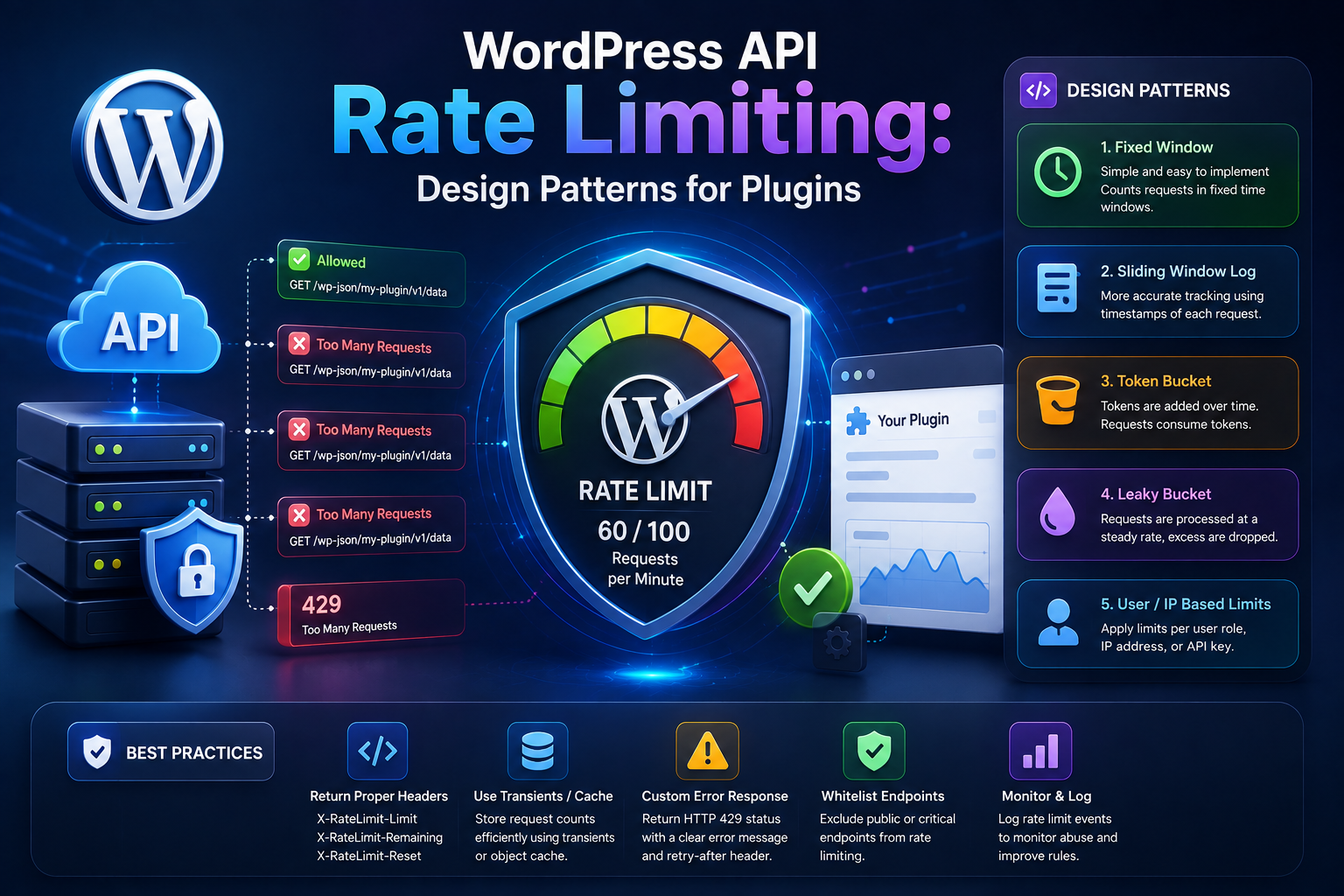
WordPress API Rate Limiting: Design Patterns for Plugins

WordPress API Rate Limiting: Design Patterns for Plugins

Learn how to handle API rate limiting in WordPress plugins, including HTTP 429 responses, backoff, Retry-After, queues, throttling, batching, caching, concurrency, and scalable API integrations. [Read More...]

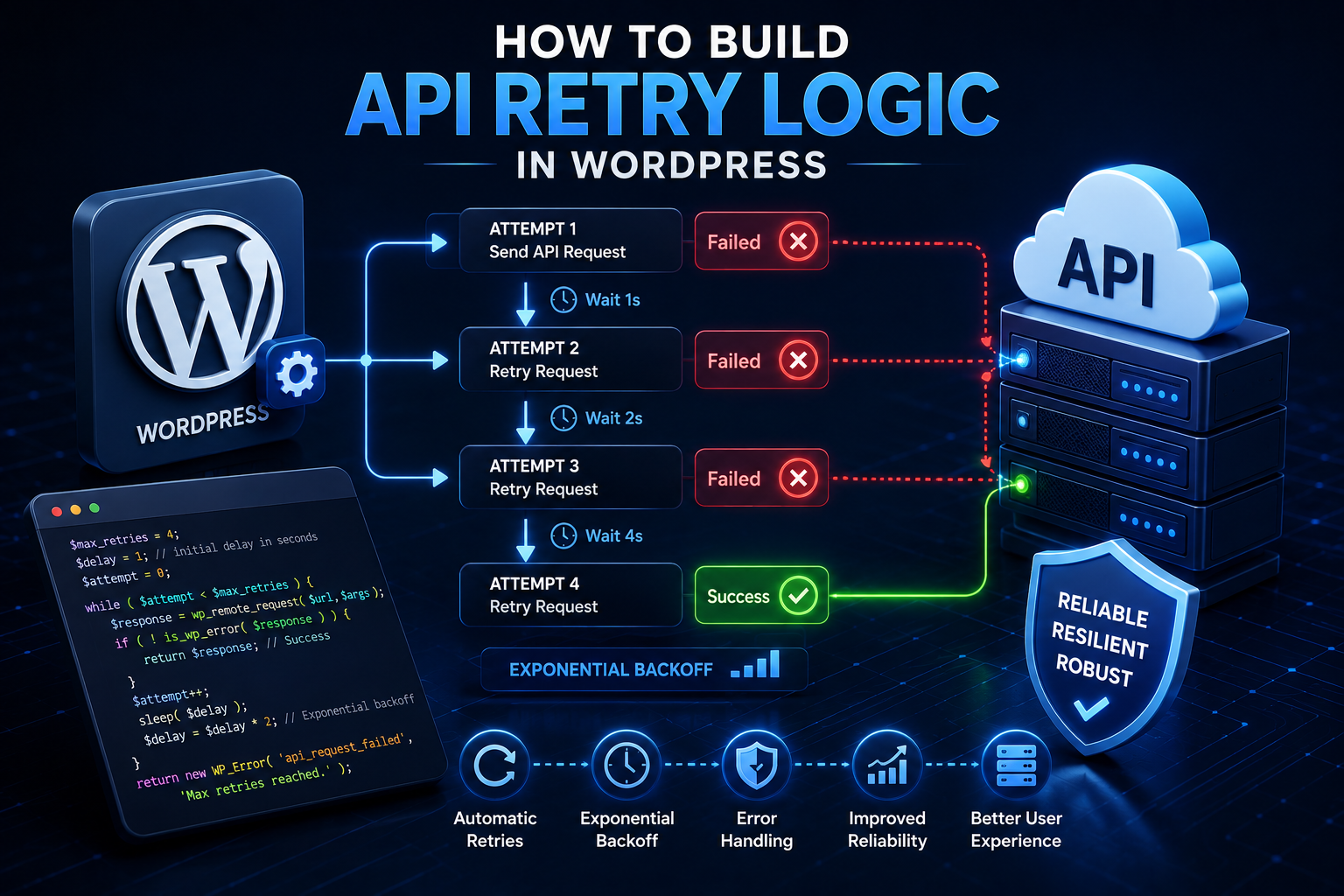
How to Build API Retry Logic in WordPress

How to Build API Retry Logic in WordPress

Learn how to build reliable API retry logic in WordPress, including retryable errors, exponential backoff, timeouts, HTTP 429 and 5xx responses, idempotency, retry limits, queues, and monitoring. [Read More...]

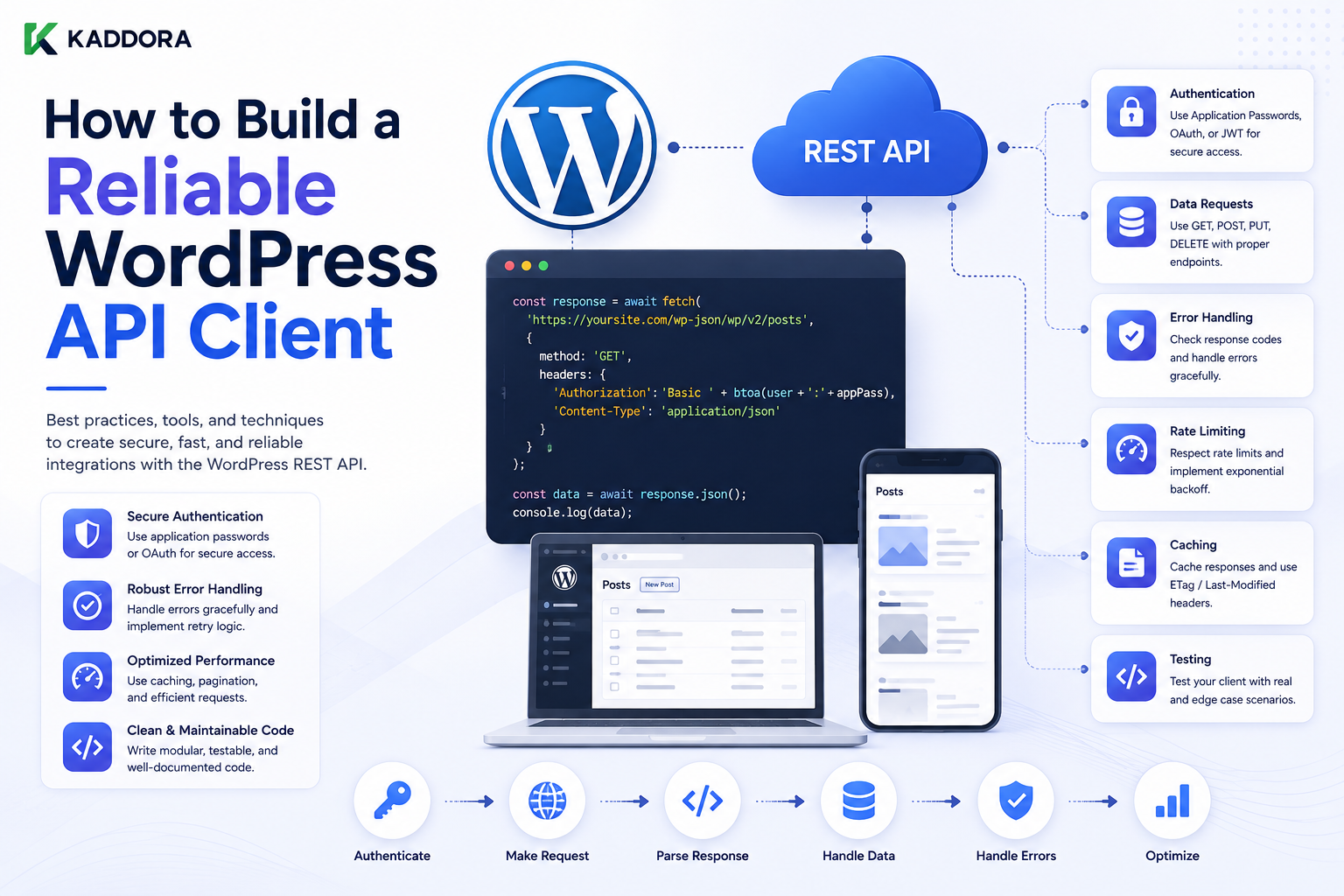
How to Build a Reliable WordPress API Client

How to Build a Reliable WordPress API Client

Learn how to build a reliable WordPress API client with secure authentication, timeouts, retries, JSON handling, response validation, caching, rate-limit handling, logging, and reusable architecture. [Read More...]

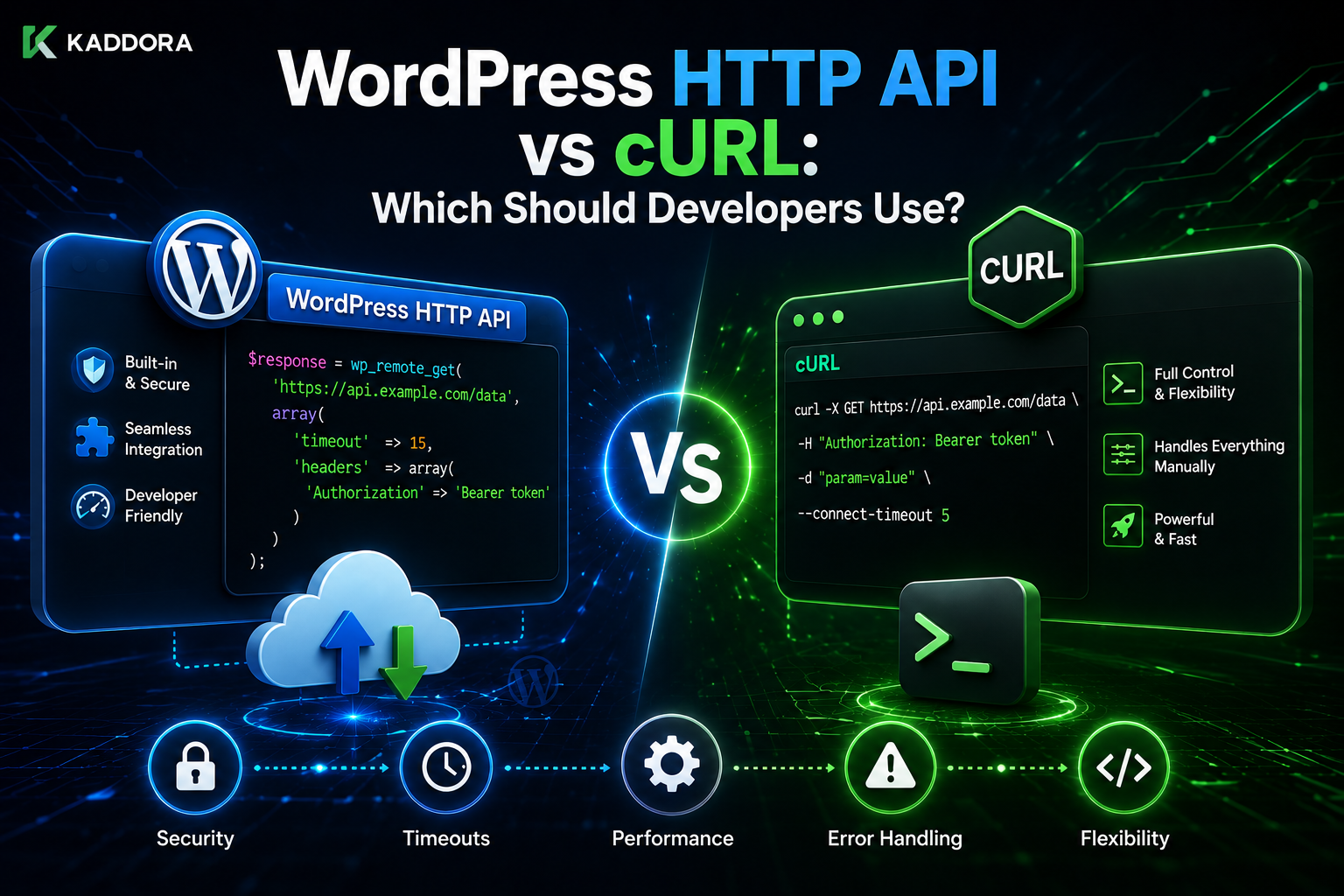
WordPress HTTP API vs cURL: Which Should Developers Use?

WordPress HTTP API vs cURL: Which Should Developers Use?

Compare the WordPress HTTP API and PHP cURL for remote requests. Learn the differences, limitations, security, compatibility, timeouts, testing, and best practices for WordPress plugins. [Read More...]

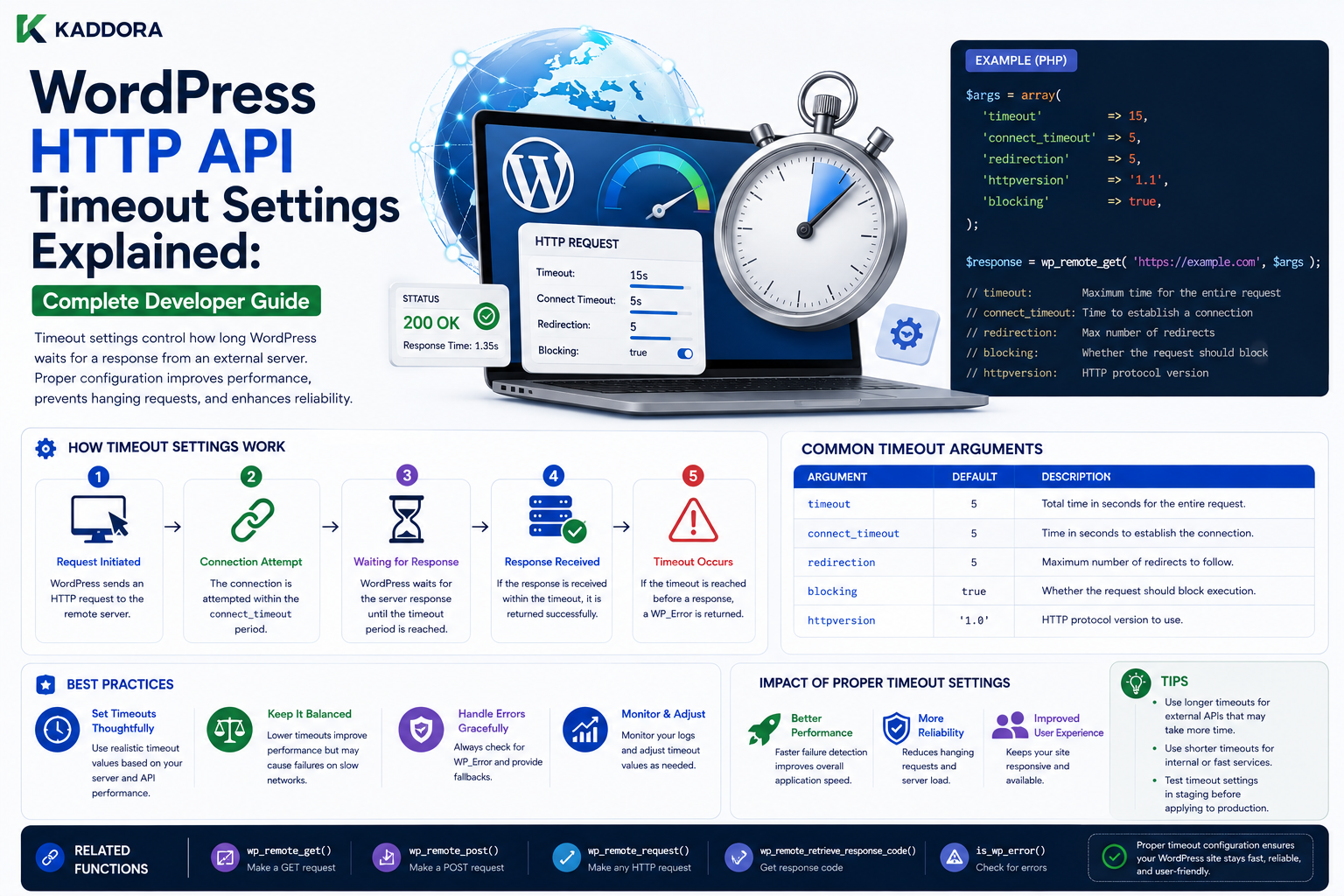
WordPress HTTP API Timeout Settings Explained: Complete Developer Guide

WordPress HTTP API Timeout Settings Explained: Complete Developer Guide

Learn how WordPress HTTP API timeout settings work, how to choose timeout values, handle slow APIs, avoid blocked PHP workers, configure background requests, and build reliable integrations. [Read More...]

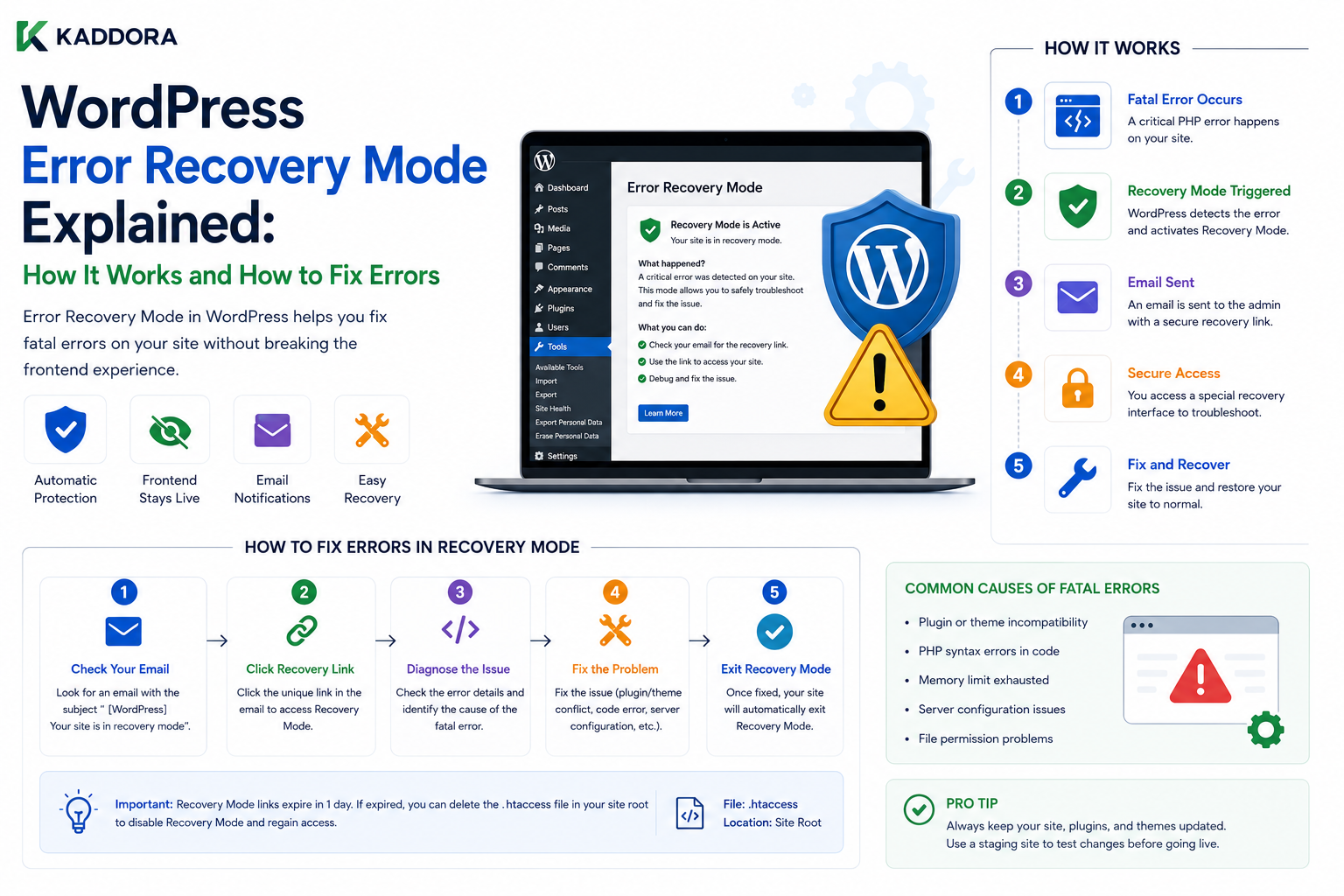
WordPress Error Recovery Mode Explained: How It Works and How to Fix Errors

WordPress Error Recovery Mode Explained: How It Works and How to Fix Errors

Learn how WordPress Error Recovery Mode works, how it detects fatal PHP errors, recovery links, plugin and theme failures, debugging, troubleshooting, recovery mode emails, and best practices. [Read More...]

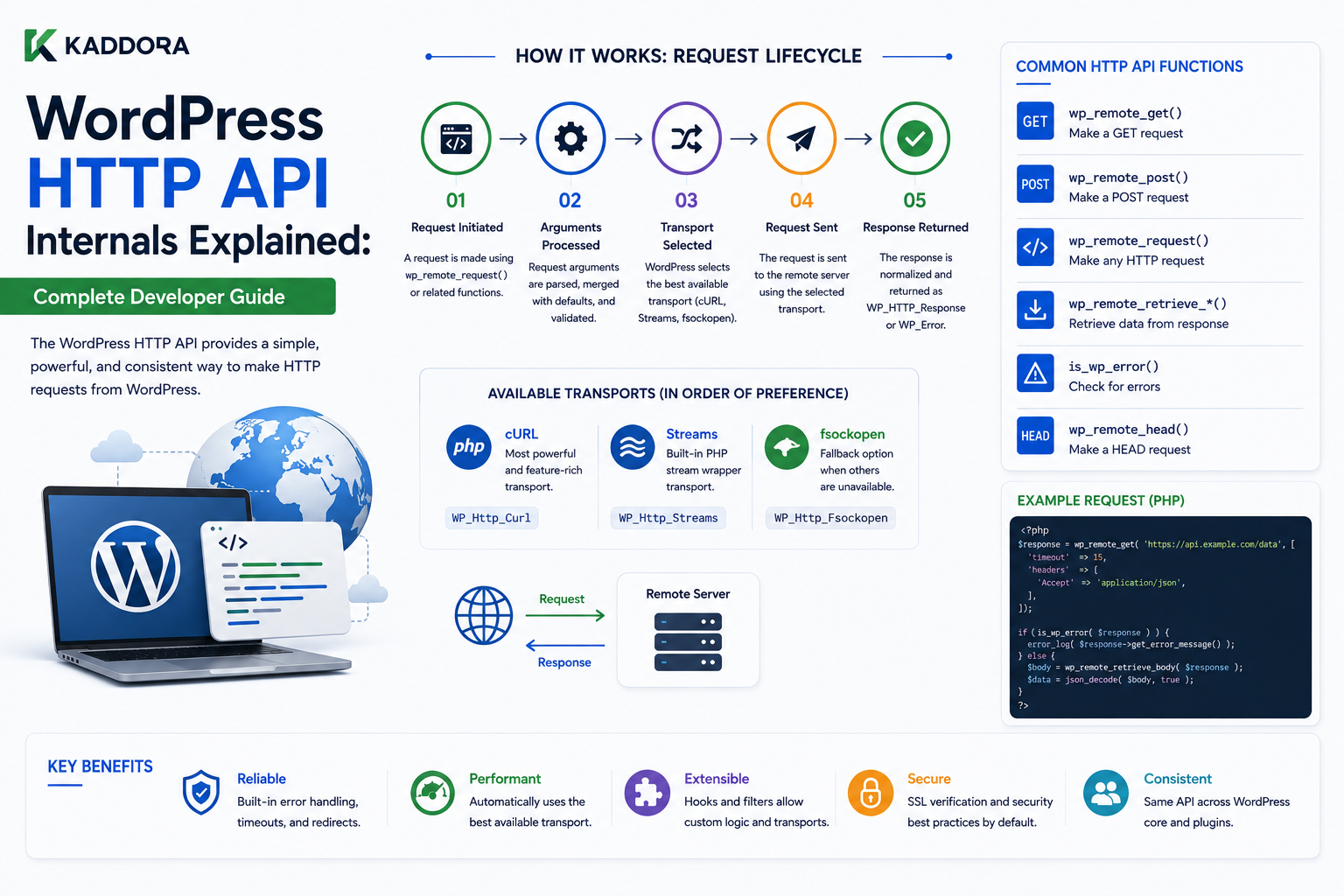
WordPress HTTP API Internals Explained: Complete Developer Guide

WordPress HTTP API Internals Explained: Complete Developer Guide

Learn how the WordPress HTTP API works internally, how wp_remote_get() and wp_remote_post() work, transports, timeouts, headers, authentication, responses, errors, caching, security. [Read More...]

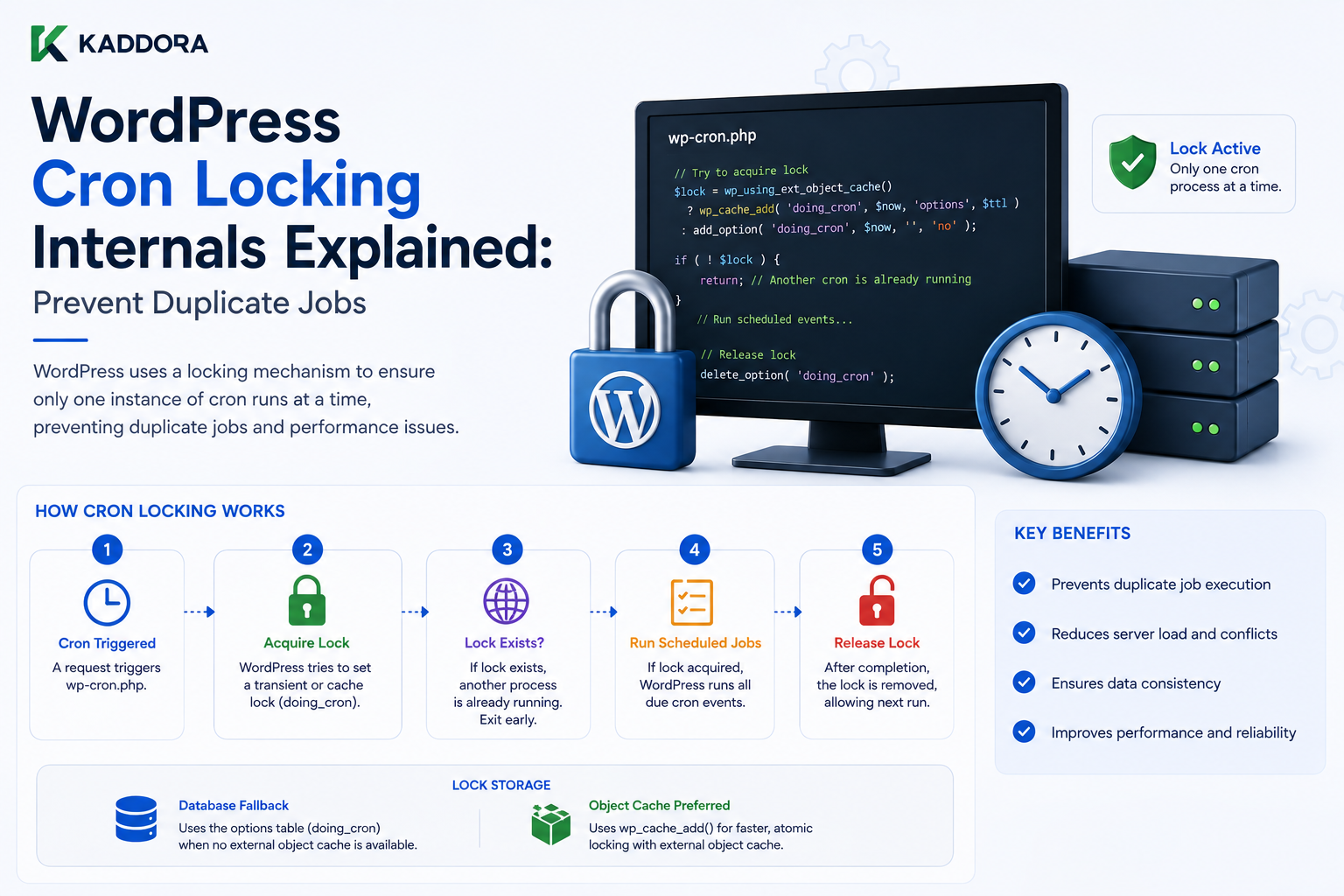
WordPress Cron Locking Internals Explained: Prevent Duplicate Jobs

WordPress Cron Locking Internals Explained: Prevent Duplicate Jobs

Learn how WordPress Cron locking works internally, how WP-Cron prevents duplicate executions, cron locks, scheduled events, concurrent requests, background jobs, debugging, performance. [Read More...]

WordPress Character Encoding and UTF-8 Explained: Complete Developer Guide

WordPress Character Encoding and UTF-8 Explained: Complete Developer Guide

Learn how WordPress handles character encoding and UTF-8, including database character sets, collation, emojis, multilingual content, special characters, forms, APIs, migrations, and troubleshooting. [Read More...]

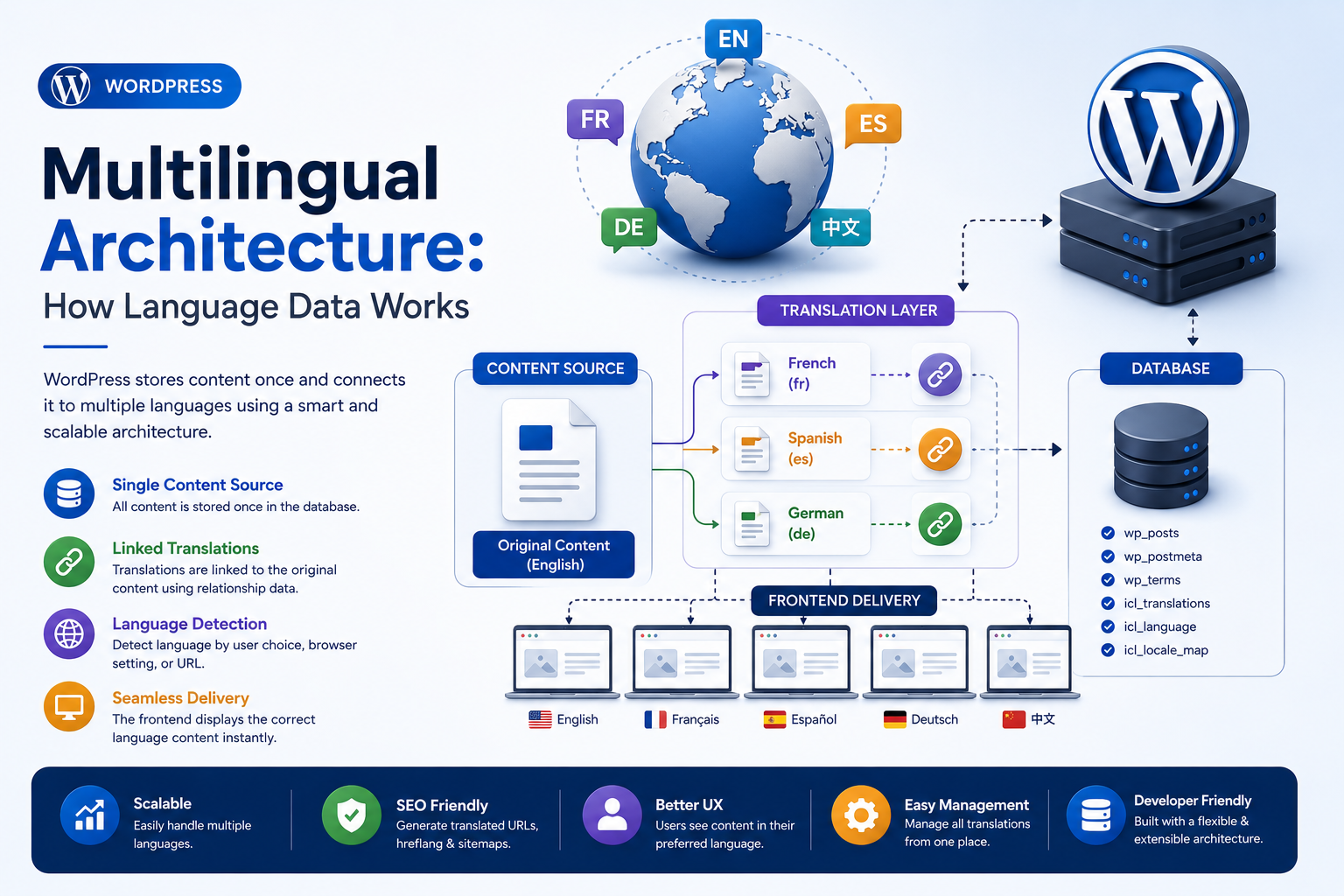
WordPress Multilingual Architecture: How Language Data Works

WordPress Multilingual Architecture: How Language Data Works

Learn how multilingual WordPress websites store language data, translate content, handle URLs, users, settings, taxonomies, media, plugins, themes, SEO, caching, and language switching. [Read More...]

We use cookies to personalize your experience. By continuing to visit this website you agree to our use of cookies

More