
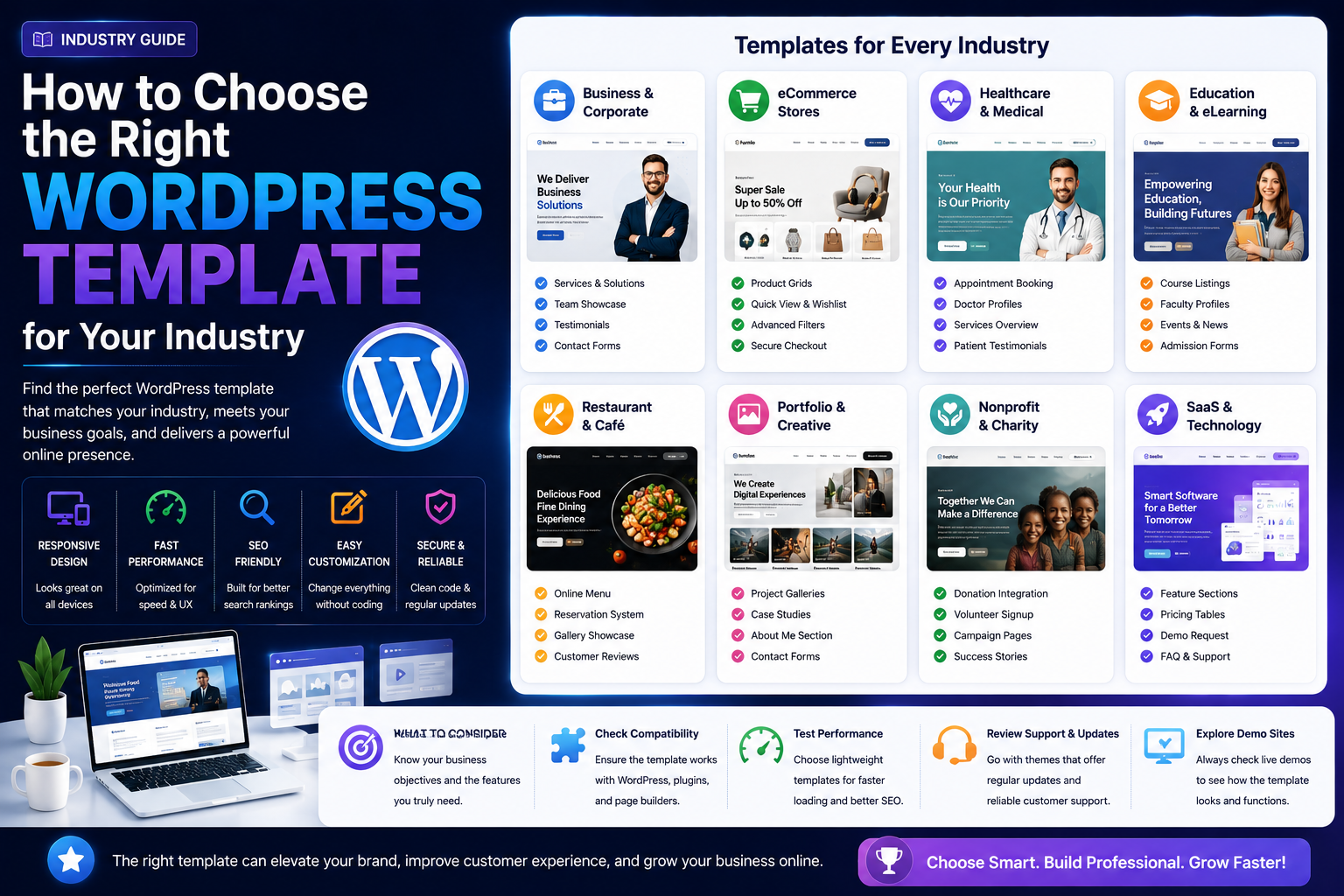
How to Choose the Right WordPress Template for Your Industry
Every business has unique goals, customers, and website requirements. A template that works perfectly for an online clothing store may not be suitable for a law firm, while a portfolio template designed for photographers might not meet the needs of a healthcare provider.
That's why choosing a WordPress template should never be based solely on appearance.
The ideal template should support your industry, improve user experience, enhance SEO, and provide the functionality your visitors expect.
Whether you're building a business website, an online store, a restaurant website, a school portal, or a creative portfolio, selecting the right WordPress template can help your website perform better and convert more visitors into customers.
This guide explains how to choose the right WordPress template based on your industry and business goals.
Why Industry-Specific Templates Matter
Visitors expect different experiences depending on the type of website they visit.
For example:
Restaurant customers expect online menus and reservation forms.
Law firms need professional service pages and consultation forms.
Online stores require optimized product pages and secure checkout.
Educational websites need course listings and student resources.
Choosing an industry-specific template helps meet these expectations while reducing customization time.
Essential Features Every Industry Needs
Regardless of your niche, every WordPress template should include:
Responsive design
Fast loading speed
SEO-friendly structure
Accessibility support
Secure coding
Easy customization
Cross-browser compatibility
Regular updates
These features improve performance and create a better user experience.
Business & Corporate Websites
Business websites should communicate professionalism and trust.
Recommended features include:
Hero section
Services page
Team profiles
Testimonials
Pricing tables
Contact forms
Google Maps integration
These elements help convert visitors into leads.
WooCommerce Stores
For eCommerce businesses, templates should prioritize shopping experiences.
Look for:
Product grids
Category filters
Quick view
Wishlist support
Mobile checkout
Product reviews
Secure payment integration
A smooth shopping journey encourages more sales.
Healthcare Websites
Medical websites require trust and accessibility.
Useful features include:
Appointment booking
Doctor profiles
Medical services
Patient testimonials
Contact information
Emergency notices
Simple navigation helps patients quickly find the information they need.
Educational Websites
Schools, colleges, and online learning platforms benefit from templates that include:
Course listings
Faculty profiles
Student portals
Event calendars
Admission forms
Learning resources
Clear organization improves the learning experience.
Restaurant Websites
Restaurants should showcase their brand and menu effectively.
Recommended features:
Online menus
Reservation forms
Gallery sections
Customer reviews
Location maps
Delivery information
High-quality visuals help attract diners.
Creative Portfolios
Designers, photographers, developers, and artists need templates that highlight their work.
Important features:
Project galleries
Case studies
Client testimonials
About section
Contact forms
Minimal layouts often work best for creative portfolios.
Nonprofit Organizations
Nonprofits should focus on engagement and donations.
Useful features include:
Donation buttons
Volunteer registration
Campaign pages
Success stories
Events calendar
Newsletter signup
Clear calls to action encourage community participation.
SaaS & Technology Companies
Technology businesses often require:
Product feature sections
Pricing tables
Integrations
Testimonials
Demo requests
Knowledge base
FAQ pages
These sections help explain products and build trust.
Real Estate Websites
Property businesses benefit from:
Property listings
Search filters
Interactive maps
Agent profiles
Mortgage calculators
Inquiry forms
Visitors should be able to browse listings easily.
Common Mistakes to Avoid
Many website owners choose templates that don't match their industry.
Avoid these mistakes:
Selecting style over functionality
Ignoring user expectations
Forgetting mobile optimization
Choosing outdated templates
Installing unnecessary features
Ignoring accessibility
A template should solve business problems—not create new ones.
Best Practices
When evaluating templates:
Review live demos.
Test mobile responsiveness.
Check loading speed.
Verify plugin compatibility.
Read customer reviews.
Compare support options.
Evaluate update history.
Research before purchasing helps avoid future migration issues.
Why Premium Templates Offer Better Value
Premium templates often provide:
Better coding standards
More customization
Dedicated support
WooCommerce enhancements
Better documentation
Faster updates
Businesses that depend on their websites generally benefit from investing in premium solutions.
Final Thoughts
Choosing the right WordPress template isn't just about creating an attractive website—it's about selecting a solution that supports your industry, improves user experience, and helps achieve your business objectives.
A template designed for your niche can reduce customization time, improve visitor engagement, and provide features that your customers already expect.
By matching your template to your industry, you'll build a stronger foundation for long-term website growth and success.
Frequently Asked Questions
Should I use an industry-specific WordPress template?
Yes. Industry-specific templates often include layouts and features that align with your business requirements, reducing the need for extensive customization.
Can I customize any WordPress template?
Most modern templates offer extensive customization, especially when combined with page builders like Elementor or Gutenberg.
Are premium templates better for businesses?
Premium templates usually provide better support, updates, customization options, and performance, making them suitable for business websites.
Do WordPress templates affect website speed?
Yes. Lightweight, well-coded templates generally load faster and provide a better user experience.
Which industries benefit most from WordPress templates?
Almost every industry—including healthcare, education, restaurants, agencies, SaaS, nonprofits, portfolios, and eCommerce—can benefit from professionally designed WordPress templates.
Comments (0)